
Bleeding gums under dental bridge Seoul: foreign patient checkup guide
Bleeding gums under dental bridge Seoul searches often begin when flossing causes blood, food collects beneath a replacement tooth, or the gum looks swollen around a supporting crown. Bleeding may relate to plaque, cleaning access, bridge contour, gum disease, decay, or restoration problems. Idea Dental Clinic near HUFS Station Exit 5 can examine the bridge, supporting teeth, gums, bite, and home-care route in person.
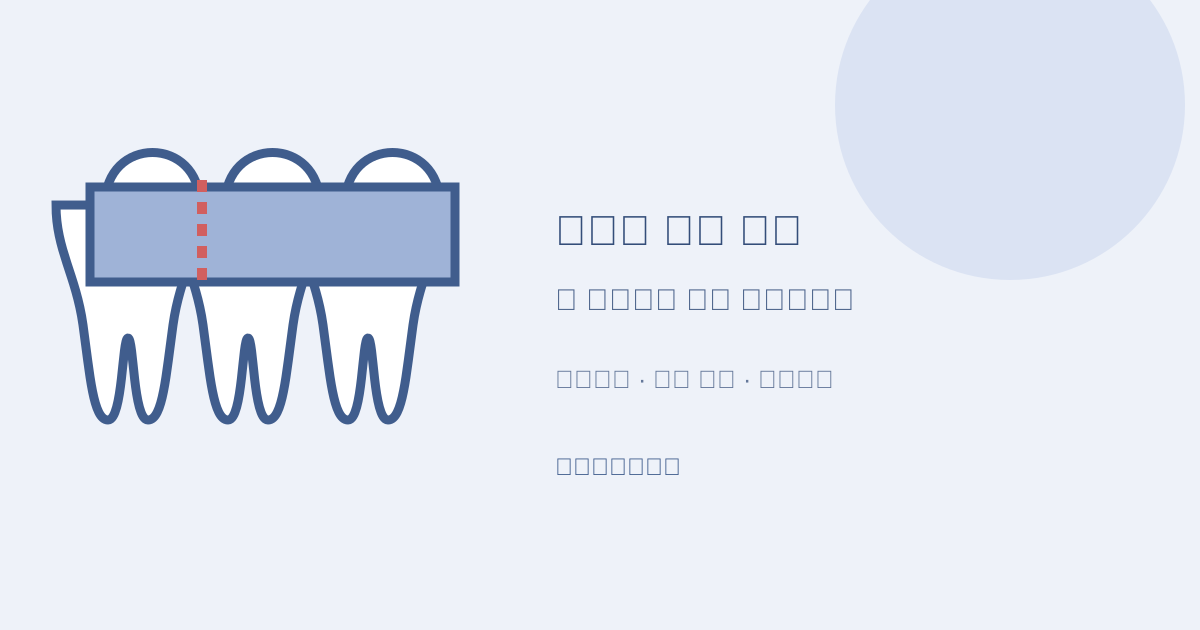
Bleeding gums under dental bridge Seoul: why the pattern matters
A fixed bridge connects replacement and supporting units, creating surfaces that ordinary brushing may not fully reach. Plaque and food can remain under the replacement tooth or around crown margins, leading to inflammation and bleeding. The timing matters: bleeding that starts after changing tools, sudden food trapping, or a new rough edge may suggest a different problem from gradual generalized gum bleeding.
Do not stop all cleaning because the gum bleeds, but do not force a large brush or snap floss into sore tissue. Record where bleeding occurs, whether it happens spontaneously or only during cleaning, and whether there is swelling, odor, bad taste, pain, movement, or fever. These observations help the dentist distinguish a technique issue from a condition that needs treatment.
Bridge gum check Dongdaemun: what the exam may include
The clinician may inspect the bridge contour and margins, probe the gums, check bleeding and pocket depth, assess plaque and calculus, and evaluate the teeth or implants supporting the bridge. Contacts with neighboring teeth, mobility, cement integrity, food-trap areas, and the bite may also be checked. Dental X-rays can be considered for decay, bone support, roots, and implant areas when indicated.
Bleeding does not automatically mean the bridge must be replaced. Professional cleaning and a better access method may be enough when the restoration is stable and tissue can recover. If the bridge has an open margin, recurrent decay, looseness, fracture, inaccessible contour, or a failing supporting tooth, a broader repair or replacement discussion may be needed. The diagnosis should identify the source before treatment is selected.
- Bring the floss threader, interdental brush, or irrigator tip you use.
- Note which side bleeds and whether food enters from beside or under the bridge.
- Mention when the bridge was placed and whether supporting teeth had root canals.
- Report diabetes, smoking, dry mouth, blood-thinning medicine, and gum history.
- Tell the clinic about travel dates and your ability to attend review visits.
Dental bridge inflammation near HUFS: plaque versus restoration factors
Plaque-related gingivitis can improve when deposits are removed and daily access becomes effective. However, an overcontoured bridge, deep or rough margin, open contact, excess cement, or space created by gum recession can continually trap plaque. A swollen area beside one supporting tooth therefore deserves evaluation of both hygiene and restoration design.
General gum disease may also affect multiple teeth and the bone supporting bridge abutments. The dentist may compare bleeding sites and pocket depths across the mouth rather than focusing only on the bridge. If an implant supports the bridge, tissue inflammation and bone changes require implant-specific assessment. Home care is important, but it cannot correct every mechanical or biological problem.
| Pattern | Possible contributing factor | What may be discussed |
|---|---|---|
| Bleeding only with a new tool | Technique or tool size | Demonstration and gentler access |
| Repeated swelling at one margin | Plaque trap, decay, fit, or excess material | Imaging and restoration review |
| Bleeding at many teeth | Generalized gum inflammation | Full gum assessment and cleaning plan |
| Bleeding around implant support | Peri-implant tissue inflammation | Implant-specific maintenance and imaging |
Bridge flossing consultation Korea: choosing an access route
A floss threader or bridge floss with a firm end can pass beneath connected units. An interdental brush may suit an open side or space under the bridge when its diameter and angle are appropriate. A single-tuft brush can reach selected margins, and an oral irrigator can flush loose debris. Water flow alone may not replace mechanical plaque removal where a surface must be wiped.
Ask for an in-chair demonstration using your bridge. The tool should contact the target surface without cutting the gum or being forced through a tight contact. If floss repeatedly shreds, catches, or cannot exit, stop and have the area checked. A rough or open margin should not be managed indefinitely by stronger pulling, and an oversized brush can create trauma that resembles disease-related bleeding.
Supporting teeth, roots, and bone need separate attention
Natural supporting teeth remain vulnerable to decay at crown margins and to periodontal bone loss. A root-canal-treated support may not produce normal cold sensitivity even when structural problems develop. The clinician may review X-rays, mobility, percussion, gum pockets, and bite loading. A problem on one support can affect the connected bridge, so early evaluation may preserve more planning options.
Implant-supported bridges differ because implants do not decay, but plaque-related tissue inflammation, component looseness, fracture, and bone changes can still occur. Cleaning tools and professional maintenance should fit the implant surface and bridge design. Tell the dentist whether the bridge is tooth-supported or implant-supported if you know, and bring component or treatment records when they are available.
Warning signs that deserve a prompt appointment
Arrange assessment promptly if the bridge moves or clicks, swelling spreads, pus or persistent bad taste appears, biting becomes painful, a supporting tooth feels loose, or food trapping changes suddenly. Facial swelling, fever, difficulty swallowing, or rapidly worsening symptoms can require urgent care. Bleeding that does not improve after careful cleaning also deserves examination rather than repeated self-treatment.
Do not use household glue on a loose bridge, scrape beneath it with metal objects, or begin leftover antibiotics without professional guidance. If a piece breaks off, keep it in a clean container and avoid chewing on the area. Re-cementation or repair depends on bridge fit, decay, fracture, and the condition of every support; the presence of the old bridge does not guarantee that it can be reused.
Foreign patient prosthetic check Seoul: preparation and timing
Bring previous X-rays if accessible, the bridge date and location, current cleaning tools, medicine and allergy information, and a note about bleeding, odor, swelling, food trapping, or movement. Photos can document visible changes but do not replace probing or imaging. Patients taking medicines that affect bleeding should not stop them without advice from the prescribing clinician.
A gum and bridge evaluation may fit one visit, while deep cleaning, restoration repair, bridge removal, root treatment, impressions, laboratory fabrication, and follow-up can require a longer sequence. Tell the clinic when you leave Seoul and ask which step is diagnostic, which is urgent, and which can continue elsewhere. Request records if your care will be shared with a dentist abroad.
Clinic NAP and Google Maps near HUFS Station Exit 5
Idea Dental Clinic is at 7F, The 305 Building, 13 Hwigyeong-ro, Dongdaemun-gu, Seoul, near HUFS Station Exit 5. It may be convenient for English-speaking residents, exchange students, and visitors around Hankuk University of Foreign Studies, Imun-dong, Hoegi, Kyung Hee University, and other Dongdaemun-gu areas.
Use the website's Google Maps link before visiting and bring bridge records, tools, symptom notes, medical and medicine information, and your follow-up schedule. A bleeding gums under dental bridge Seoul guide can support preparation, but the cause and treatment require an in-person gum, bridge, supporting-tooth or implant, bite, and imaging assessment when indicated.
Before visiting a dental clinic in Seoul
Prosthetic retreatment may involve more than replacing an old crown. Food trapping, odor, gum inflammation, open margins, hidden decay, and bite changes should be checked together. For international patients, it is also helpful to prepare a short timeline: when the problem started, what triggers discomfort, which dental work was done before, and how long you plan to stay in Seoul.
Idea Dental Clinic is located near HUFS Station Exit 5 in Dongdaemun-gu, Seoul. The English articles on this site are written for people visiting from abroad, exchange students, English-speaking residents, and visitors who need practical dental information before an in-person exam. They do not replace a diagnosis, dental imaging, or consultation with a clinician.
If you are comparing several dental clinics in Seoul, focus on whether the first visit can answer the practical questions that affect your decision: what appears urgent, what imaging may be needed, whether the tooth or gum condition is stable enough for treatment, how many visits may be realistic, and what should be monitored if you leave Korea soon.
- Bring previous X-rays or treatment records if available.
- Write down current symptoms, medication history, and travel schedule.
- Tell the clinic about old crowns, inlays, implants, orthodontic treatment, or root canal treatment.
- Ask which issues are urgent and which can be monitored after diagnosis.
- Use the map link or phone number to confirm visit timing before coming to the clinic.
Planning a visit for bleeding gums under dental bridge Seoul
If you are preparing a visit for bleeding gums under dental bridge Seoul, it can help to write down related concerns such as bridge gum check Dongdaemun, dental bridge inflammation near HUFS, bridge flossing consultation Korea, foreign patient prosthetic check Seoul before the appointment. Clear notes make it easier to discuss symptoms, previous dental work, and treatment timing.
Dental care is often local and situation-based. A patient may need a dentist near HUFS, a crown consultation in Seoul, inlay treatment in Dongdaemun, or prosthetic dental care in Korea, but the actual treatment plan still depends on an in-person oral exam, X-rays, gum evaluation, and bite assessment.
For English-speaking patients, a concise written note can reduce confusion during the appointment. Include the tooth or jaw area, the type of discomfort, when it started, what makes it worse, previous dental treatment, medication or allergy details, and the dates when you are available for follow-up. This helps connect search intent with a responsible clinical workflow.
Frequently asked questions
What can cause bleeding gums under dental bridge Seoul?
Possible causes include plaque, food trapping, cleaning trauma, gum disease, bridge contour or margin problems, decay, excess material, or inflammation around supporting teeth or implants.
Does a bridge gum check Dongdaemun always lead to replacement?
No. The plan may involve cleaning guidance, professional debridement, gum care, monitoring, repair, or replacement depending on bridge stability and the underlying cause.
Can dental bridge inflammation near HUFS improve with flossing?
Plaque-related inflammation may improve with effective cleaning, but persistent bleeding, swelling, a rough margin, decay, looseness, or deep pockets require professional evaluation.
Which tool is best for bridge flossing in Korea?
The best tool depends on bridge design and space. A clinician may demonstrate a floss threader, bridge floss, interdental brush, single-tuft brush, or irrigator combination.
Where can a foreign patient arrange a prosthetic check in Seoul?
Idea Dental Clinic is near HUFS Station Exit 5 at 7F, The 305 Building, 13 Hwigyeong-ro, Dongdaemun-gu, Seoul. Use Google Maps before visiting.
This article provides general dental information. Diagnosis and treatment planning may change after an in-person oral exam, dental imaging, gum evaluation, and consultation with a clinician.