
Broken dental bridge Seoul: foreign patient consultation guide
A broken dental bridge Seoul search may follow a loose feeling, a chipped surface, a bridge coming off, food trapping, an unpleasant taste, or sudden difficulty chewing. A bridge connects several clinical questions: the restoration itself, the supporting teeth or implants, the gums beneath it, and the bite. Idea Dental Clinic is near HUFS Station Exit 5 in Dongdaemun-gu for international patients around HUFS, Imun-dong, Hoegi, and Kyung Hee University who need an in-person prosthetic assessment.
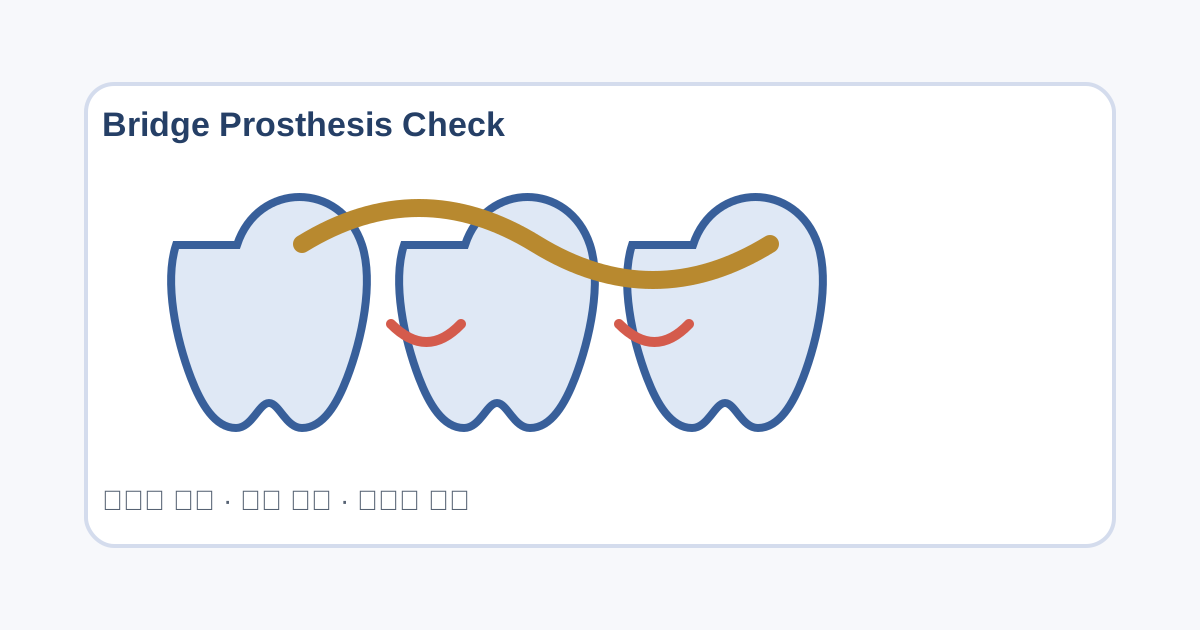
Broken dental bridge Seoul: protect the area before the visit
A bridge can fracture in its porcelain or other outer material, loosen from one supporting tooth, come off as one piece, or break together with underlying tooth structure. These situations may look similar in a mirror but require different care. Contact a clinic promptly, particularly if the bridge moves, an edge is sharp, the supporting tooth hurts, or chewing suddenly changes.
If the bridge has come out, keep it in a clean container and bring it. Do not force it back, use household glue, or keep testing whether it will stay during meals. Adhesive can injure tissue and interfere with clinical cleaning or re-cementation. Avoid hard and sticky foods on the affected side, keep exposed areas gently clean, and take care not to swallow a loose component.
Seek urgent assessment if trauma caused heavy bleeding, a supporting tooth appears fractured or mobile, facial swelling develops, or swallowing or breathing becomes difficult. A small surface chip without pain may be less urgent, but it should still be evaluated because roughness, altered bite, exposed framework, and hidden supporting-tooth problems can influence the plan.
Loose bridge dentist Dongdaemun: what the exam may investigate
A loose bridge dentist Dongdaemun appointment begins by determining whether the entire bridge moves or only one section. The dentist may inspect margins, supporting teeth, implant components when applicable, gum tissue, plaque access, and the shape of the area replacing the missing tooth. Bite paper can show whether excessive contact is contributing to looseness or fracture.
Dental X-rays may help assess decay under retainers, root condition, bone support, previous root canal treatment, and implant components. X-rays cannot show every crack or all decay, especially beneath metal, so the bridge and teeth are also assessed clinically. If the bridge must be removed, hidden findings can change the initial estimate.
Tell the dentist when the bridge was placed, whether it is supported by natural teeth or implants, and when movement or breakage began. Mention repeated food trapping, odor, bleeding, pain on biting, recent trauma, grinding, or earlier re-cementation. Bring the bridge and previous records when available.
- Bring the detached bridge or fragment in a clean container.
- Do not use household glue or force the bridge into place.
- Record looseness, pain, odor, bleeding, and food trapping separately.
- Mention root canal treatment, implants, grinding, and prior repairs.
- Share your departure date and ability to attend follow-up visits.
Dental bridge repair near HUFS: repair, re-cementation, or replacement
A dental bridge repair near HUFS decision depends on why the restoration failed. Re-cementation may be considered only when the bridge, supporting teeth, margins, and fit remain suitable and contamination can be controlled. Simply cementing a bridge back without checking decay, fracture, or fit can hide the reason it loosened.
A limited surface chip may sometimes be polished or repaired, but repairability depends on material, location, bite force, exposed framework, appearance, and remaining bridge integrity. A structural fracture, open margin, recurrent decay, poor cleaning access, or damaged supporting tooth may make replacement more realistic. Implant-supported bridges raise additional questions about screws and component fit.
The condition of abutment teeth is central. A bridge cannot be evaluated as an isolated object if one support has decay, a crack, root problem, mobility, or inadequate remaining structure. The treatment plan may need to address that tooth first and reconsider whether another bridge, an implant-based option, a removable prosthesis, or another approach is appropriate.
| Finding | What may be checked | Possible discussion |
|---|---|---|
| Bridge detached but intact | Fit, cement, margins, decay, supporting teeth | Re-cementation only if clinically suitable |
| Small surface chip | Material, framework, bite, sharpness | Polishing, repair, monitoring, or replacement |
| Decay or fracture under retainer | Restorability, root, gum and bone support | Treat support first and redesign prosthesis |
| Implant bridge movement | Screws, components, bite, tissue | Component service, repair, or remake planning |
Old bridge replacement Korea: planning the supporting foundation
An old bridge replacement Korea plan may require removal of the existing restoration, decay cleanup, core buildup, gum treatment, root canal evaluation, or extraction of a non-restorable support before a final design is chosen. These possibilities should be discussed before removal because the exact condition under the bridge may remain uncertain until it is seen directly.
If a new bridge is considered, the dentist may evaluate span length, distribution of support, remaining tooth structure, gum health, cleaning access, bite force, grinding, and appearance. The process can include preparation, scan or impression, a temporary bridge, laboratory fabrication, fitting, and follow-up. A bridge that replaces several teeth or involves front-tooth shade matching can need more planning.
Alternative options depend on anatomy and priorities. A patient may discuss an implant, a removable partial denture, a redesigned bridge, or staged treatment, but no option is universally best. Surgery, bone, neighboring teeth, maintenance, treatment time, medical history, and budget all affect the decision after examination.
Before bridge removal: separate what is known from what needs checking
A bridge may look repairable until it is removed, and an X-ray may show useful information without revealing every crack, decay edge, or the amount of sound tooth left beneath a retainer. Before agreeing to removal, ask which findings are already visible, what the clinician expects to learn only after removal, and whether removal could make the existing bridge unusable. This is not a reason to delay a necessary examination; it helps set a realistic plan when a bridge has to be evaluated in stages.
For a short-stay patient, write down the decision points that could change the next step: whether the supporting tooth can be restored, whether the bridge can be reused, whether temporary protection is needed, and what follow-up can safely occur before departure. If treatment continues elsewhere, ask for a written record of the bridge location and supports, current findings, images taken, procedures completed, materials or temporary measures used, and the recommended next review.
| Question to clarify | Why it matters before removal | Useful record for follow-up |
|---|---|---|
| What can be confirmed while the bridge is still in place? | An image and exam may show some margins, roots, bone, bite, and movement, but not every hidden condition | Current symptoms, images, and the clinician's stated working findings |
| What may only be known after removal? | Decay, fractures, remaining tooth structure, and bridge reuse may remain uncertain until direct inspection | Removal findings and whether the bridge remained intact or reusable |
| What happens if the support needs more care? | Support treatment can change the temporary and final prosthetic sequence | Tooth numbers, treatment completed, temporary protection, and next-step recommendation |
| Can follow-up fit my departure date? | A temporary step and a definitive bridge may have different review needs | Planned review date and instructions for the next dentist if travel intervenes |
Foreign patient prosthetic dentist Seoul: travel and continuity
A foreign patient prosthetic dentist Seoul visit should include exact travel dates at the start. An emergency smoothing or temporary measure may be possible in a short appointment, while bridge removal, treatment of supporting teeth, temporary fabrication, laboratory work, final fitting, and bite review may require multiple visits. Do not assume a permanent bridge can be completed safely between two close flights.
Ask whether the proposed step is diagnostic, temporary, or definitive. If treatment will continue in another country, request X-rays, tooth numbers, bridge-support details, procedures completed, materials used, and follow-up recommendations. Keep a detached component because its shape and fit may provide useful information even when it cannot be reused.
After treatment, cleaning under the replacement tooth and around retainers is important. The team may demonstrate floss threaders, interdental brushes, or other tools suited to the actual design. Maintenance advice should be individualized so that cleaning does not damage gum tissue or leave areas inaccessible.
Location and preparation near HUFS Station Exit 5
Idea Dental Clinic is at 7F, The 305 Building, 13 Hwigyeong-ro, Dongdaemun-gu, Seoul, near HUFS Station Exit 5. It may be convenient for English-speaking residents, exchange students, and visitors around Hankuk University of Foreign Studies, Imun-dong, Hoegi, Kyung Hee University, and nearby Dongdaemun-gu.
Use the Google Maps link on this website before visiting. Bring the bridge or fragments, previous X-rays when accessible, a timeline of symptoms and earlier repairs, medicine and allergy information, and your travel dates. Avoid chewing on a mobile bridge and do not attempt household repair.
This broken dental bridge Seoul guide cannot determine online whether re-cementation, repair, replacement, or treatment of a supporting tooth is appropriate. An in-person oral exam, dental imaging when indicated, gum and bite evaluation, and inspection of the bridge are needed before the plan and number of visits can be estimated.
Before visiting a dental clinic in Seoul
Prosthetic retreatment may involve more than replacing an old crown. Food trapping, odor, gum inflammation, open margins, hidden decay, and bite changes should be checked together. For international patients, it is also helpful to prepare a short timeline: when the problem started, what triggers discomfort, which dental work was done before, and how long you plan to stay in Seoul.
Idea Dental Clinic is located near HUFS Station Exit 5 in Dongdaemun-gu, Seoul. The English articles on this site are written for people visiting from abroad, exchange students, English-speaking residents, and visitors who need practical dental information before an in-person exam. They do not replace a diagnosis, dental imaging, or consultation with a clinician.
If you are comparing several dental clinics in Seoul, focus on whether the first visit can answer the practical questions that affect your decision: what appears urgent, what imaging may be needed, whether the tooth or gum condition is stable enough for treatment, how many visits may be realistic, and what should be monitored if you leave Korea soon.
- Bring previous X-rays or treatment records if available.
- Write down current symptoms, medication history, and travel schedule.
- Tell the clinic about old crowns, inlays, implants, orthodontic treatment, or root canal treatment.
- Ask which issues are urgent and which can be monitored after diagnosis.
- Use the map link or phone number to confirm visit timing before coming to the clinic.
Planning a visit for broken dental bridge Seoul
If you are preparing a visit for broken dental bridge Seoul, it can help to write down related concerns such as loose bridge dentist Dongdaemun, dental bridge repair near HUFS, old bridge replacement Korea, foreign patient prosthetic dentist Seoul before the appointment. Clear notes make it easier to discuss symptoms, previous dental work, and treatment timing.
Dental care is often local and situation-based. A patient may need a dentist near HUFS, a crown consultation in Seoul, inlay treatment in Dongdaemun, or prosthetic dental care in Korea, but the actual treatment plan still depends on an in-person oral exam, X-rays, gum evaluation, and bite assessment.
For English-speaking patients, a concise written note can reduce confusion during the appointment. Include the tooth or jaw area, the type of discomfort, when it started, what makes it worse, previous dental treatment, medication or allergy details, and the dates when you are available for follow-up. This helps connect search intent with a responsible clinical workflow.
Frequently asked questions
What should I do with a broken dental bridge Seoul before my appointment?
Keep a detached bridge or fragment in a clean container, avoid hard chewing, clean gently, and do not use household glue or force it back into place.
What does a loose bridge dentist Dongdaemun check?
The dentist may assess bridge movement, margins, supporting teeth or implants, decay, gum tissue, bite, X-rays, and the history of previous repairs.
Can dental bridge repair near HUFS be completed in one visit?
Selected polishing, repair, or re-cementation may be possible, but only if the bridge and supports are suitable. Hidden decay, fracture, or poor fit can require staged care.
What affects an old bridge replacement Korea plan?
Supporting-tooth condition, roots, bone and gums, bridge span, bite, cleanability, materials, appearance, medical history, timing, and alternative replacement options all matter.
What should I ask before a broken bridge is removed if I will travel soon?
Ask what the current exam and images can confirm, what may only be known after removal, whether the bridge could be reused, whether temporary protection is needed, which decision points could change the plan, and what written records and follow-up are needed if care continues elsewhere.
Where is Idea Dental Clinic for a foreign patient prosthetic dentist Seoul visit?
Idea Dental Clinic is near HUFS Station Exit 5 at 7F, The 305 Building, 13 Hwigyeong-ro, Dongdaemun-gu, Seoul. Use Google Maps before visiting.
This article provides general dental information. Diagnosis and treatment planning may change after an in-person oral exam, dental imaging, gum evaluation, and consultation with a clinician.