
Crown bite change Seoul: foreign patient evaluation guide
Crown bite change Seoul searches may begin when an older crown suddenly contacts first, chewing pressure shifts, the jaw feels tired, or a tooth becomes tender without a recent crown procedure. The cause may involve tooth movement, wear, clenching, a neighboring restoration, gum or root support, or a crown problem. Idea Dental Clinic near HUFS Station Exit 5 can evaluate the crown, tooth, bite, gums, and imaging findings in person.
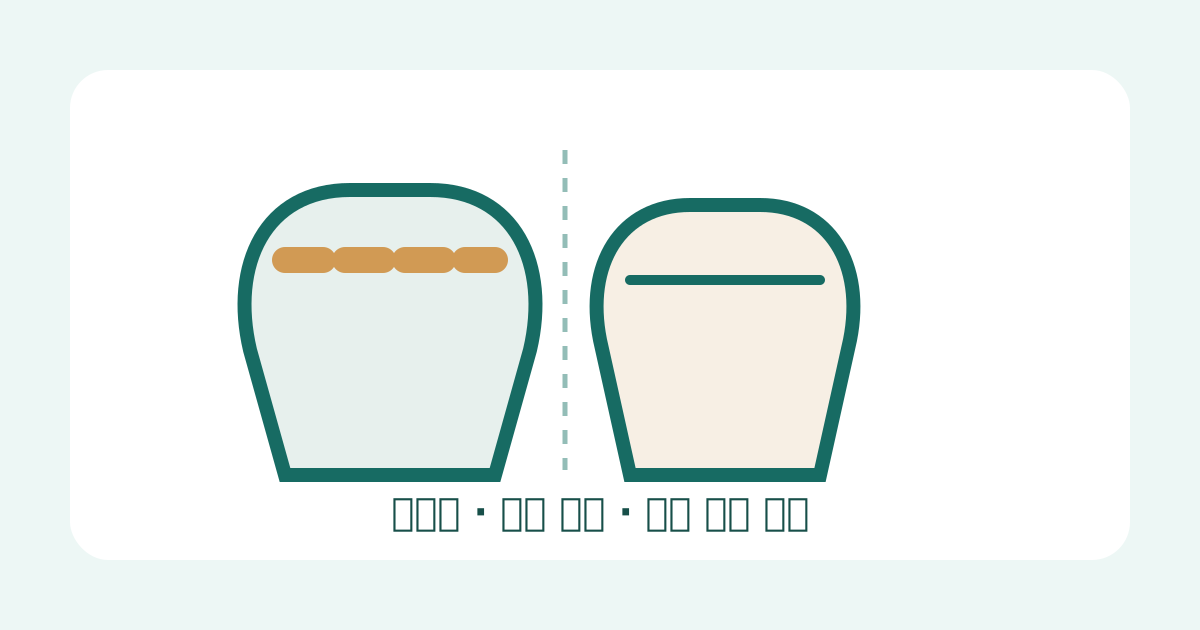
Crown bite change Seoul: why an old crown can feel different
A crown that felt comfortable for years can seem high or heavy later even though its shape has not visibly changed. Natural teeth can shift, opposing surfaces can wear, a neighboring tooth may receive new treatment, and clenching habits can change how force is distributed. Gum inflammation or support changes may also make a tooth feel different under pressure. The sensation deserves assessment, but it does not prove that the crown itself is too tall.
Describe whether the crown touches first when closing, hurts only on hard food, feels tender after waking, or creates jaw fatigue later in the day. Note whether the change followed another filling, orthodontic retainer problem, trauma, hard chewing, or a period of stress-related clenching. A crown bite change Seoul visit should compare symptoms with clinical bite contacts rather than relying only on how the crown looks in a mirror.
Old crown feels high Dongdaemun: symptoms and timing
A true high contact may create repeated pressure when the teeth close, but several conditions can mimic it. A cracked tooth, inflamed ligament around the root, decay under a crown, gum infection, root canal problem, sinus-related pressure, or jaw muscle tension may all alter the sensation of biting. Tell the dentist whether cold or heat also triggers pain, whether releasing the bite hurts, and whether the tooth feels loose or the gum is swollen.
Seek prompt assessment for swelling, fever, rapidly increasing pain, facial trauma, crown movement, pus, or difficulty opening the mouth. For milder symptoms, avoid repeatedly tapping the tooth or testing hard foods. Chew on the other side when practical and record the pattern. Self-adjusting a crown or using abrasive tools can damage the restoration and cannot identify the underlying cause.
- First contact when closing normally
- Pain on biting down or on release
- Morning tenderness or jaw fatigue
- Cold, heat, swelling, odor, or bad taste
- Recent dental work, trauma, or retainer changes
Crown pressure near HUFS Station: what the exam may check
The dentist may inspect the crown margin and surface, test mobility and tenderness, examine the gums, mark bite contacts, and compare closure with side-to-side or forward jaw movements. X-rays may be considered to assess the root, bone, old root canal treatment, decay, and crown margin when indicated. A normal-looking X-ray does not rule out every crack or bite problem, so findings are interpreted with clinical tests and the symptom history.
The clinician may also check other teeth. A new filling or crown elsewhere can redirect force, a missing tooth can allow movement, and worn opposing teeth can change the bite relationship. Jaw muscles and joint symptoms matter when discomfort is widespread. The goal is to identify whether pressure is localized to the crowned tooth, part of a broader occlusal pattern, or related to another dental condition.
| Finding | Possible meaning | Discussion |
|---|---|---|
| Heavy marked contact | Localized bite load | Conservative adjustment if clinically appropriate |
| Tender root support | Inflammation or overload | Cause-focused tests and monitoring |
| Open or rough margin | Plaque, decay, or fit concern | Imaging and crown review |
| Widespread wear and muscle fatigue | Clenching or broader bite pattern | Habit, muscle, tooth, and appliance evaluation |
Bite evaluation for foreigners Korea: adjustment is not automatic
Grinding a crown is irreversible, so adjustment should follow evidence that a contact is excessive and relevant to symptoms. Removing material simply because a patient senses pressure can create a low contact, affect neighboring teeth, or mask another diagnosis. The dentist may first compare repeated bite markings, tooth tenderness, crown material thickness, opposing wear, and jaw movements. Small selective changes may be discussed only when the clinical pattern supports them.
If the crown is fractured, loose, poorly fitting, decayed at the margin, or structurally unsuitable, adjustment alone may not solve the problem. Conversely, a stable crown with a minor contact issue may not need replacement. Ask which finding supports each option, what uncertainty remains, and how symptoms will be reviewed after any conservative step. Treatment should be proportional to the confirmed problem.
Crown wear check Seoul: tooth, material, and opposing surface
Crown materials and opposing teeth wear differently. Polished ceramic, metal, resin, natural enamel, and existing restorations can develop surface changes over time. The dentist may inspect for a rough patch, porcelain chip, exposed underlying material, flattened contact, or wear on the opposing tooth. A crown that remains intact may still need polishing or monitoring if its surface is rough or the bite pattern is changing.
Wear is considered alongside function. Ask whether the crown has enough material thickness, whether a chip affects strength or only surface texture, and whether clenching protection is relevant. A night guard is not automatically appropriate for every patient; jaw symptoms, tooth condition, existing restorations, bite stability, and appliance tolerance should be evaluated first. Online photographs cannot measure contact force or structural support.
Treatment pathways and short-stay timing
Possible pathways include monitoring, polishing, selective adjustment, treatment of gum inflammation, evaluation of a neighboring tooth, root canal assessment, repair, or crown replacement. The appropriate sequence depends on the diagnosis. If replacement is considered, hidden decay, remaining tooth structure, the core, and cracks may only be fully assessed after crown removal, which can change timing and the final plan.
Foreign patients should share departure dates before treatment begins. A diagnostic visit and a small adjustment may fit a short stay, while crown removal, core treatment, scanning, temporary crown, laboratory work, fitting, and follow-up require more time. Ask what can be confirmed today, whether a temporary stage is expected, and what documentation you need if monitoring or treatment continues outside Seoul.
How to prepare for a crown and bite appointment
Bring previous X-rays and crown records if available, including the placement date, material, root canal history, and any bite adjustments. Write down when the sensation began and whether it followed treatment on another tooth. Mention clenching, headaches, jaw clicking, orthodontic retainers, missing teeth, and recent trauma. Medication, allergy, and medical information remains relevant even when the concern seems mechanical.
After an adjustment or other treatment, ask what short-term sensation may be expected and when to return. Persistent or worsening pain, swelling, crown movement, a new high contact, or inability to chew should be reviewed. Do not assume that immediate numbness-free comfort proves the underlying issue is resolved; some conditions need observation and repeat testing.
Clinic NAP and Google Maps near HUFS Station Exit 5
Idea Dental Clinic is at 7F, The 305 Building, 13 Hwigyeong-ro, Dongdaemun-gu, Seoul, near HUFS Station Exit 5. It may be accessible from Hankuk University of Foreign Studies, Imun-dong, Hoegi, Kyung Hee University, and nearby Dongdaemun neighborhoods.
Use the website's Google Maps link before visiting. Bring crown records, symptom notes, medical details, and your follow-up schedule. A crown bite change Seoul guide can help organize questions, but the cause and appropriate care require an in-person oral exam, bite testing, gum and tooth evaluation, and imaging when indicated.
Before visiting a dental clinic in Seoul
Crown treatment planning depends on remaining tooth structure, cracks, previous root canal treatment, bite force, gum condition, and the material selected for the final restoration. For international patients, it is also helpful to prepare a short timeline: when the problem started, what triggers discomfort, which dental work was done before, and how long you plan to stay in Seoul.
Idea Dental Clinic is located near HUFS Station Exit 5 in Dongdaemun-gu, Seoul. The English articles on this site are written for people visiting from abroad, exchange students, English-speaking residents, and visitors who need practical dental information before an in-person exam. They do not replace a diagnosis, dental imaging, or consultation with a clinician.
If you are comparing several dental clinics in Seoul, focus on whether the first visit can answer the practical questions that affect your decision: what appears urgent, what imaging may be needed, whether the tooth or gum condition is stable enough for treatment, how many visits may be realistic, and what should be monitored if you leave Korea soon.
- Bring previous X-rays or treatment records if available.
- Write down current symptoms, medication history, and travel schedule.
- Tell the clinic about old crowns, inlays, implants, orthodontic treatment, or root canal treatment.
- Ask which issues are urgent and which can be monitored after diagnosis.
- Use the map link or phone number to confirm visit timing before coming to the clinic.
Planning a visit for crown bite change Seoul
If you are preparing a visit for crown bite change Seoul, it can help to write down related concerns such as old crown feels high Dongdaemun, crown pressure near HUFS Station, bite evaluation for foreigners Korea, crown wear check Seoul before the appointment. Clear notes make it easier to discuss symptoms, previous dental work, and treatment timing.
Dental care is often local and situation-based. A patient may need a dentist near HUFS, a crown consultation in Seoul, inlay treatment in Dongdaemun, or prosthetic dental care in Korea, but the actual treatment plan still depends on an in-person oral exam, X-rays, gum evaluation, and bite assessment.
For English-speaking patients, a concise written note can reduce confusion during the appointment. Include the tooth or jaw area, the type of discomfort, when it started, what makes it worse, previous dental treatment, medication or allergy details, and the dates when you are available for follow-up. This helps connect search intent with a responsible clinical workflow.
Frequently asked questions
What can cause a crown bite change Seoul patients notice years later?
Possible factors include tooth movement, wear, clenching, new dental work, crown damage, gum or root inflammation, decay, cracks, or a broader bite change.
Does an old crown feels high Dongdaemun concern always need adjustment?
No. A dentist should confirm relevant heavy contact and rule out tooth, root, gum, crack, decay, and jaw-muscle causes before irreversible adjustment.
What happens during a crown pressure near HUFS Station exam?
The dentist may check crown fit, margins, mobility, gums, tenderness, bite contacts, jaw movements, nearby teeth, and dental X-rays when indicated.
Can a crown wear check Seoul lead to crown replacement?
Sometimes, but monitoring, polishing, adjustment, repair, or treatment of another cause may be more appropriate depending on the clinical findings.
Where is Idea Dental Clinic for a bite evaluation in Seoul?
Idea Dental Clinic is near HUFS Station Exit 5 at 7F, The 305 Building, 13 Hwigyeong-ro, Dongdaemun-gu, Seoul. Use Google Maps before visiting.
This article provides general dental information. Diagnosis and treatment planning may change after an in-person oral exam, dental imaging, gum evaluation, and consultation with a clinician.