
Dental bridge bite pain Seoul: foreign patient evaluation guide
A dental bridge bite pain Seoul consultation checks whether discomfort comes from a supporting tooth, the bridge connector or bite, gum inflammation, food trapping, decay, a crack, or another nearby structure. Because a bridge joins multiple areas, the examination should identify the painful location and review each supporting tooth rather than assuming the entire bridge needs replacement.
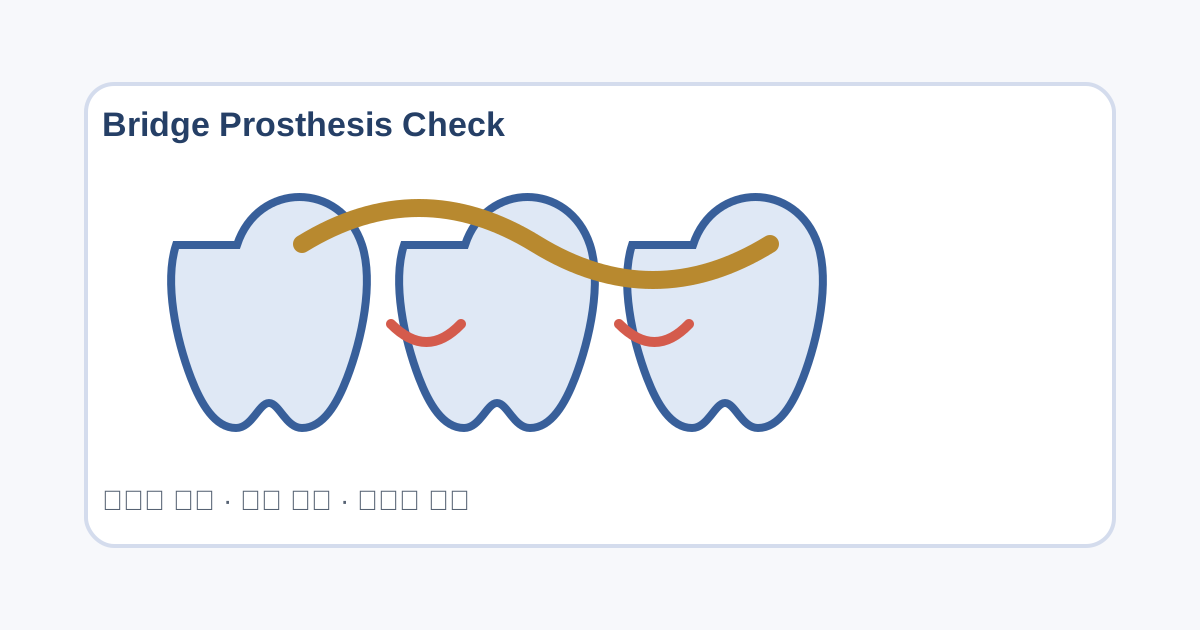
Dental bridge bite pain Seoul: describe the pain before naming the cause
Pain when chewing on a bridge can feel sharp, dull, pressure-like, or difficult to locate. It may occur only with hard food, when releasing the bite, after food becomes trapped, or for several minutes after eating. Tell the dentist whether the bridge was recently fitted, whether the bite has changed, and whether the discomfort is in one supporting tooth or across the whole area.
A bridge can transmit force between supporting teeth, so the tooth that feels sore may not be the only structure requiring assessment. Possible sources include a high contact, loosened cement, decay at a margin, a cracked supporting tooth, pulp or root inflammation, gum disease, an overloaded connector, food impaction, or pain referred from another tooth or jaw muscle. Symptoms alone cannot reliably separate them.
Contact a clinic promptly if pain is worsening, the bridge moves, a piece fractures, the gum swells, drainage or fever occurs, or you cannot chew normally. Facial swelling with breathing or swallowing difficulty, severe trauma, or uncontrolled bleeding requires emergency medical assessment rather than waiting for routine bridge care.
Pain under dental bridge Dongdaemun: history and home observations
For pain under dental bridge Dongdaemun, record when the bridge was placed, which teeth were used as supports, and whether either tooth had root canal treatment. Note recent hard-food episodes, clenching, impact, cleaning changes, and previous periods of looseness or bad taste. Bring older X-rays or treatment records if available, especially when the bridge was made outside Korea.
Observe without repeatedly testing the bridge. Tell the dentist whether floss or a bridge threader passes differently, whether food packs under the replacement tooth, whether the gum bleeds, and whether cold or heat triggers a response. Do not pry at the bridge, use household glue, or chew hard objects to see whether it moves; these actions can worsen a fracture or contaminate a loose restoration.
- Mark whether pain occurs on biting, release, cold, heat, or spontaneously.
- Note movement, clicking, fracture, odor, bleeding, or food trapping.
- Bring bridge dates, root canal history, and previous images if available.
- List medicines, allergies, clenching habits, and relevant medical conditions.
- Explain how long you will remain in Seoul for follow-up.
Bridge supporting tooth check Korea: what the dentist may assess
A bridge supporting tooth check Korea may include visual inspection of margins and connectors, mobility testing, tapping and bite tests, gum probing, plaque and food-trap assessment, and bite marking. Pulp tests may be used on teeth that have not had root canal treatment. The dentist may also examine neighboring and opposing teeth because another tooth can mimic bridge pain.
Each supporting tooth should be considered separately. One support may have a healthy root and stable margin while the other has decay, periodontal attachment loss, a fracture, or an endodontic concern. The replacement-tooth area may have inflamed tissue from limited cleaning even when both supports are structurally stable. These different findings lead to different treatment discussions.
| Possible source | What may be checked | Possible discussion |
|---|---|---|
| High or changed bite | Marking contacts, wear, tenderness | Adjustment only when clinically indicated |
| Margin or cement problem | Fit, movement, decay, cleaning access | Monitor, re-cement, repair, or remake assessment |
| Supporting tooth problem | Pulp tests, crack signs, root and bone | Tooth-specific treatment or prognosis review |
| Gum and food trapping | Pocket, contour, hygiene access, inflammation | Cleaning instruction, periodontal care, design review |
Dental bridge X-ray near HUFS: what imaging can and cannot show
A dental bridge X-ray near HUFS may show margin changes, decay when visible radiographically, root canal quality, bone levels, root-tip findings, and supporting-tooth anatomy. Different views may be selected for the suspected problem. Panoramic images provide broad context, while smaller dental images may provide more detail for particular teeth.
X-rays do not show every crack, loose cement layer, bite interference, or early decay, and metal or dense restorative material can obscure areas. The clinician combines imaging with direct examination and symptom tests. If a diagnosis remains uncertain, observation, additional testing, removal of the bridge, or referral may be discussed, each with its own risks and information value.
Ask what the image confirms and what can only be learned after bridge removal. Removal may damage the bridge or reveal hidden decay and limited tooth structure, so the possibility of reuse should not be promised before the procedure. A conditional plan helps a short-stay patient understand the best and more complex scenarios.
Foreign patient bridge repair consultation: repair, re-cement, or remake
A foreign patient bridge repair consultation should distinguish a small accessible material defect from a problem involving fit, connector strength, supporting teeth, decay, or movement. Polishing, limited repair, bite adjustment, or re-cementation may be possible in selected cases, but they are not interchangeable and do not correct every underlying cause.
Re-cementation requires checking why the bridge loosened, whether the inside and supporting teeth can be cleaned, whether decay or fracture is present, and whether the bridge still seats accurately. A bridge that does not fit completely should not be forced into place. A remake may be considered when structure, margin, connector, hygiene design, or supporting-tooth treatment cannot be addressed predictably with a smaller intervention.
If only one supporting tooth has a problem, the bridge design can make treatment more complex because the units are connected. Ask whether access through the restoration, sectioning, removal, a provisional bridge, or a different future design is being considered. Final decisions depend on tooth prognosis and patient priorities after examination.
Short-stay timing, records, and aftercare
Bridge treatment may require diagnosis, removal, treatment of supporting teeth, healing or observation, scans or impressions, provisional work, laboratory fabrication, fitting, cementation, and bite review. A visitor may not have enough time for all stages. Share flight and university dates before irreversible work begins and ask which temporary option, if any, is suitable for the available follow-up window.
If care will continue elsewhere, request available X-rays, tooth numbers, findings, procedures, materials, and a description of any temporary restoration. After treatment, follow eating and cleaning instructions and seek review for increasing pain, swelling, movement, fracture, or bite discomfort. A reduction in symptoms does not replace the recommended follow-up examination.
Clinic NAP and Google Maps near HUFS Station Exit 5
Idea Dental Clinic is at 7F, The 305 Building, 13 Hwigyeong-ro, Dongdaemun-gu, Seoul, near HUFS Station Exit 5. The location may be practical for international residents, visitors, and exchange students around Hankuk University of Foreign Studies, Imun-dong, Hoegi, Kyung Hee University, and Dongdaemun-gu.
Use the Google Maps link on this website and confirm appointment availability. Bring bridge records, X-rays, symptom notes, medicine and allergy information, and your departure schedule. A dental bridge bite pain Seoul guide helps organize questions, but the source and treatment plan require an in-person exam and suitable imaging or tests.
Before visiting a dental clinic in Seoul
Prosthetic retreatment may involve more than replacing an old crown. Food trapping, odor, gum inflammation, open margins, hidden decay, and bite changes should be checked together. For international patients, it is also helpful to prepare a short timeline: when the problem started, what triggers discomfort, which dental work was done before, and how long you plan to stay in Seoul.
Idea Dental Clinic is located near HUFS Station Exit 5 in Dongdaemun-gu, Seoul. The English articles on this site are written for people visiting from abroad, exchange students, English-speaking residents, and visitors who need practical dental information before an in-person exam. They do not replace a diagnosis, dental imaging, or consultation with a clinician.
If you are comparing several dental clinics in Seoul, focus on whether the first visit can answer the practical questions that affect your decision: what appears urgent, what imaging may be needed, whether the tooth or gum condition is stable enough for treatment, how many visits may be realistic, and what should be monitored if you leave Korea soon.
- Bring previous X-rays or treatment records if available.
- Write down current symptoms, medication history, and travel schedule.
- Tell the clinic about old crowns, inlays, implants, orthodontic treatment, or root canal treatment.
- Ask which issues are urgent and which can be monitored after diagnosis.
- Use the map link or phone number to confirm visit timing before coming to the clinic.
Planning a visit for dental bridge bite pain Seoul
If you are preparing a visit for dental bridge bite pain Seoul, it can help to write down related concerns such as pain under dental bridge Dongdaemun, bridge supporting tooth check Korea, dental bridge X-ray near HUFS, foreign patient bridge repair consultation before the appointment. Clear notes make it easier to discuss symptoms, previous dental work, and treatment timing.
Dental care is often local and situation-based. A patient may need a dentist near HUFS, a crown consultation in Seoul, inlay treatment in Dongdaemun, or prosthetic dental care in Korea, but the actual treatment plan still depends on an in-person oral exam, X-rays, gum evaluation, and bite assessment.
For English-speaking patients, a concise written note can reduce confusion during the appointment. Include the tooth or jaw area, the type of discomfort, when it started, what makes it worse, previous dental treatment, medication or allergy details, and the dates when you are available for follow-up. This helps connect search intent with a responsible clinical workflow.
Frequently asked questions
What can cause dental bridge bite pain Seoul?
Possible sources include bite contact, loose cement, decay, a crack, pulp or root inflammation, gum disease, food trapping, connector problems, or pain referred from another area.
What happens during a pain under dental bridge Dongdaemun visit?
The dentist may check bridge movement, margins, supporting teeth, gums, bite, pulp response, neighboring teeth, and X-rays selected for the suspected source.
Can a bridge supporting tooth check Korea evaluate each support separately?
Yes. Each supporting tooth can have a different margin, pulp or root status, bone support, crack risk, and prognosis even though the bridge connects them.
Will a dental bridge X-ray near HUFS show every problem?
No. X-rays help evaluate roots, bone and some decay or margin findings, but they may not show every crack, cement problem, bite issue, or hidden area.
Where is Idea Dental Clinic for a foreign patient bridge repair consultation?
Idea Dental Clinic is near HUFS Station Exit 5 at 7F, The 305 Building, 13 Hwigyeong-ro, Dongdaemun-gu, Seoul. Open Google Maps before visiting.
This article provides general dental information. Diagnosis and treatment planning may change after an in-person oral exam, dental imaging, gum evaluation, and consultation with a clinician.