
Inlay check after biting hard food Seoul: patient guide
An inlay check after biting hard food Seoul visit considers whether the event affected the restoration, a remaining tooth wall, the contact between teeth, the pulp, or the bite. A sharp sound or momentary pain does not identify a crack by itself, and an intact-looking inlay can still require tests when biting discomfort persists. Idea Dental Clinic is near HUFS Station Exit 5 for international patients around Dongdaemun-gu who need a careful exam and a plan that fits their time in Seoul.
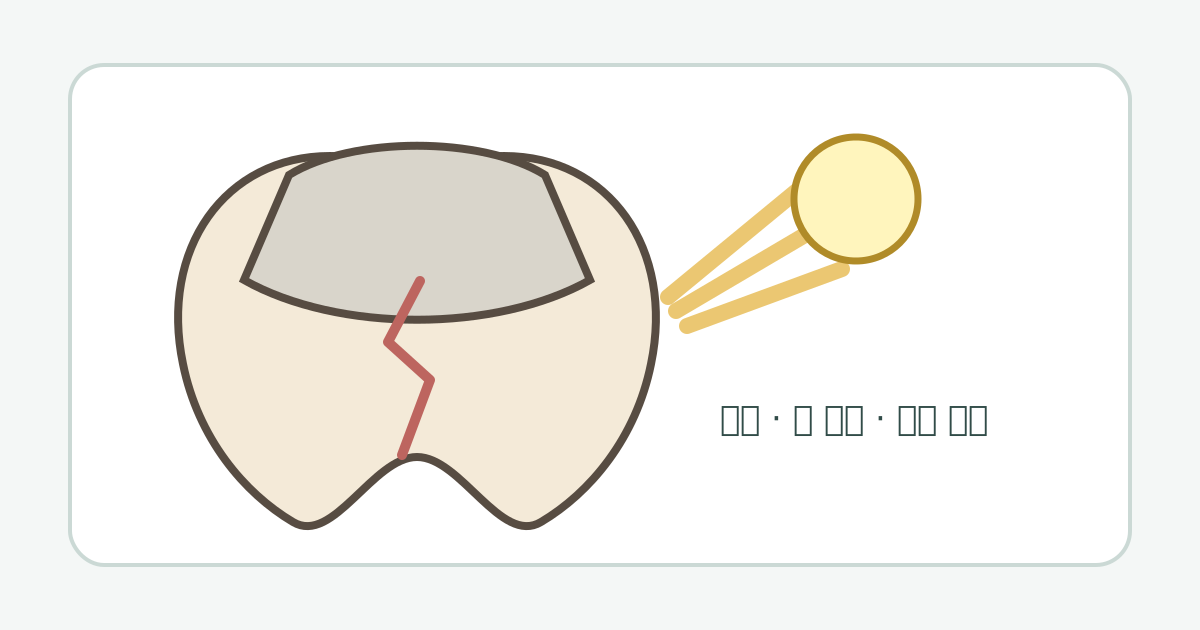
Inlay check after biting hard food Seoul: do not diagnose the sound
An inlay check after biting hard food Seoul often follows a sudden crunch, sharp pain, or the feeling that a restoration changed while eating ice, nuts, bones, seeds, hard candy, or another firm item. The sound may come from food rather than tooth structure. Conversely, the absence of a visible break does not rule out a small crack, loosened restoration, or injured tooth wall.
Record what you bit, which side was involved, and whether pain occurred during pressure, on release, afterward, or only with cold or heat. Note any rough edge, food trapping, floss change, movement, or new high spot. These patterns help select tests but cannot confirm the source without examination.
Arrange prompt assessment if a large piece is missing, the tooth or inlay moves, pain is increasing or spontaneous, swelling or drainage appears, or you cannot chew normally. Rapid facial swelling, breathing or swallowing difficulty, severe trauma, or uncontrolled bleeding needs urgent local care.
Inlay pain after hard food Dongdaemun: safe preparation
For inlay pain after hard food Dongdaemun, avoid repeatedly biting on pens, spoons, kernels, or other test objects. Choose softer food and chew on the other side until assessed. Continue gentle brushing and interdental cleaning if possible, but stop forcing floss through an area where it catches or shreds and tell the dentist what changed.
If a fragment came out, place it in a clean container. Do not use household adhesive or a temporary repair material without professional instructions. A piece may be restoration, tooth, food, or calculus; its appearance alone does not determine whether it can be reused or whether the tooth needs coverage.
Bring the inlay date, material if known, earlier X-rays, cavity history, root canal information, and any previous bite adjustments. List medicines, allergies, clenching or grinding history, and travel dates. If the inlay was completed overseas, original files and tooth numbers can help continuity.
- Write down the food, timing, sound, and exact pain pattern.
- Avoid hard chewing and repeated self-testing.
- Bring any detached piece in a clean container.
- Share previous inlay, cavity, and bite records.
- State how long you can return for follow-up in Seoul.
Cracked inlay check near HUFS: what may be examined
A cracked inlay check near HUFS may include magnified visual inspection, drying and illumination, gentle probing of accessible margins, bite tests on individual cusps, tapping, mobility, gum assessment, and comparison with neighboring teeth. Pulp-response tests may be appropriate when symptoms suggest the nerve inside the tooth could be involved.
The dentist may look for a fracture within the restorative material, a line in the remaining tooth, a missing marginal ridge, open contact, cement or bonding failure, recurrent decay, or a high bite. Stain at a margin is not automatically decay, and a visible line is not automatically a crack that needs a crown.
Some crack patterns are difficult to confirm without removing a restoration, but removal is irreversible and can reveal a larger defect than expected. Ask what can be learned non-destructively first, what uncertainty remains, and how the result of removal could change the plan.
| Symptom or finding | What may be checked | Possible discussion |
|---|---|---|
| Pain on biting or release | Cusps, crack signs, contact and bite | Monitor, adjust, restore, or further evaluate |
| Rough or chipped edge | Material loss, tooth wall, margin | Polish, repair, replace, or cover |
| Cold sensitivity | Pulp response, exposed dentin, margin | Observation, restorative care, or pulp review |
| Food or floss change | Contact, contour, fracture, gum | Cleaning advice, repair, or replacement assessment |
Bite test for inlay Korea: what results mean and do not mean
A bite test for inlay Korea may apply controlled pressure to different parts of the tooth. Pain on pressure, pain on release, or no response can add information, but none is a stand-alone diagnosis. The result is interpreted with the history, direct view, pulp tests, periodontal findings, and imaging.
Bite marking paper may identify heavy or changed contacts, especially if the inlay was recent or the patient noticed a new high spot. Adjustment should be based on clinical findings because unnecessary grinding can alter the restoration and bite without treating a hidden crack or pulp problem.
Jaw-muscle or TMJ discomfort can sometimes feel like tooth pain after forceful chewing. The clinician may compare the tooth with surrounding areas and ask about clenching, broad morning soreness, joint sounds, and muscle tenderness. That assessment prevents every post-meal ache from being attributed to the inlay.
X-rays and the limits of online photographs
Small dental X-rays may help evaluate recurrent decay, the depth of an earlier restoration, the pulp space, root area, bone, and contact region. Different angles can reduce overlap. An image may support a diagnosis, but many fine cracks and bonding failures do not appear directly on routine X-rays.
Phone photographs can show a missing piece or rough edge and help booking communication, but glare, saliva, angle, and limited access obscure margins. A photograph cannot test pulp response, bite force, movement, or the depth and direction of a crack. Do not rely on an image-based promise that the inlay only needs polishing or replacement.
Three-dimensional imaging is not routine for every inlay concern. It may be considered only when a specific diagnostic question justifies it. Ask what the proposed image is meant to answer and whether the answer would change treatment.
Foreign patient inlay consultation Seoul: resin, inlay, onlay, or crown
A foreign patient inlay consultation Seoul may compare a limited repair, resin restoration, new inlay, onlay, or crown after the damaged and remaining structure is assessed. The choice depends on defect size, cusp support, crack direction, pulp condition, contact, isolation, bite load, previous preparation, and the amount of sound tooth remaining.
A conservative option is not automatically the smallest restoration by name. A repair may preserve material in a suitable case, while inadequate coverage of a weakened cusp could leave risk. A crown removes more tooth and should not be selected solely because the patient heard a crack. The dentist should explain the structural reasoning and alternatives.
If pulp inflammation or a deep fracture is suspected, the sequence may change. Monitoring, temporary protection, root canal evaluation, or referral may be discussed before final restoration. No article can predict restorability or promise that symptoms will resolve with one procedure.
Short-stay timing, estimates, and aftercare
Inlay or onlay treatment can involve examination, removal, decay or crack assessment, preparation, scanning or impression, temporary protection, laboratory work, fitting, bonding or cementation, finishing, and bite review. Same-day completion is not assumed. Share flight, exam, and work dates before irreversible treatment begins.
Ask whether the estimate includes imaging, temporary care, laboratory fees, core treatment, final placement, and follow-up. Hidden findings after removal can change cost and timing. An insurer decides reimbursement, so request the exact receipt or record it requires without assuming coverage.
After treatment, follow food, cleaning, and review instructions. Return for worsening pain, spontaneous or night pain, swelling, loss of the temporary, fracture, or a bite that feels persistently high. If leaving Korea, request images, tooth number, diagnosis, material, procedure, and pending review.
Clinic NAP and Google Maps visit cue
Idea Dental Clinic is located at 7F, The 305 Building, 13 Hwigyeong-ro, Dongdaemun-gu, Seoul, near HUFS Station Exit 5. It may be practical from Hankuk University of Foreign Studies, Imun-dong, Hoegi, Kyung Hee University, and nearby Dongdaemun-gu.
Open the Google Maps link on this website and confirm appointment availability. Bring the detached piece if any, previous images, inlay details, symptom notes, medicines and allergies, and the dates you can return. State clearly if pain is worsening or swelling is present.
An inlay check after biting hard food Seoul guide supports preparation but cannot identify the damaged structure online. An in-person exam, controlled tests, selected imaging, and individualized discussion are needed before repair, replacement, or monitoring.
Before visiting a dental clinic in Seoul
Inlay and onlay decisions depend on cavity size, contact points between teeth, the chewing surface, remaining tooth walls, and whether a conservative resin restoration is still reasonable. For international patients, it is also helpful to prepare a short timeline: when the problem started, what triggers discomfort, which dental work was done before, and how long you plan to stay in Seoul.
Idea Dental Clinic is located near HUFS Station Exit 5 in Dongdaemun-gu, Seoul. The English articles on this site are written for people visiting from abroad, exchange students, English-speaking residents, and visitors who need practical dental information before an in-person exam. They do not replace a diagnosis, dental imaging, or consultation with a clinician.
If you are comparing several dental clinics in Seoul, focus on whether the first visit can answer the practical questions that affect your decision: what appears urgent, what imaging may be needed, whether the tooth or gum condition is stable enough for treatment, how many visits may be realistic, and what should be monitored if you leave Korea soon.
- Bring previous X-rays or treatment records if available.
- Write down current symptoms, medication history, and travel schedule.
- Tell the clinic about old crowns, inlays, implants, orthodontic treatment, or root canal treatment.
- Ask which issues are urgent and which can be monitored after diagnosis.
- Use the map link or phone number to confirm visit timing before coming to the clinic.
Planning a visit for inlay check after biting hard food Seoul
If you are preparing a visit for inlay check after biting hard food Seoul, it can help to write down related concerns such as inlay pain after hard food Dongdaemun, cracked inlay check near HUFS, bite test for inlay Korea, foreign patient inlay consultation Seoul before the appointment. Clear notes make it easier to discuss symptoms, previous dental work, and treatment timing.
Dental care is often local and situation-based. A patient may need a dentist near HUFS, a crown consultation in Seoul, inlay treatment in Dongdaemun, or prosthetic dental care in Korea, but the actual treatment plan still depends on an in-person oral exam, X-rays, gum evaluation, and bite assessment.
For English-speaking patients, a concise written note can reduce confusion during the appointment. Include the tooth or jaw area, the type of discomfort, when it started, what makes it worse, previous dental treatment, medication or allergy details, and the dates when you are available for follow-up. This helps connect search intent with a responsible clinical workflow.
Frequently asked questions
What happens during an inlay check after biting hard food Seoul?
The dentist may inspect the inlay and tooth, test individual cusps and bite contacts, assess pulp and gums, and use selected X-rays to evaluate possible causes.
What should I do about inlay pain after hard food Dongdaemun?
Avoid hard chewing and repeated testing, keep any detached piece clean, note pain triggers and changes, and arrange an exam if symptoms persist or worsen.
Does a cracked inlay check near HUFS always lead to a crown?
No. Monitoring, polishing, repair, resin, inlay, onlay, crown, pulp care, or referral may be discussed depending on the actual structural and clinical findings.
Can a bite test for inlay Korea prove there is a crack?
No. Bite tests add information but must be interpreted with examination, symptom history, pulp tests, gum findings, bite analysis, and imaging.
Where is Idea Dental Clinic for a foreign patient inlay consultation Seoul?
It is near HUFS Station Exit 5 at 7F, The 305 Building, 13 Hwigyeong-ro, Dongdaemun-gu, Seoul. Use Google Maps before visiting.
This article provides general dental information. Diagnosis and treatment planning may change after an in-person oral exam, dental imaging, gum evaluation, and consultation with a clinician.